forbidden words: Gulf of Mexico
Gulf of Mexico noun / geography
The Gulf of Mexico (Spanish: Golfo de México) is an oceanic basin and a marginal sea of the Atlantic Ocean, mostly surrounded by the North American continent. It is bounded on the northeast, north, and northwest by the Gulf Coast of the United States; on the southwest and south by the Mexican states of Tamaulipas, Veracruz, Tabasco, Campeche, Yucatán, and Quintana Roo; and on the southeast by Cuba. The coastal areas along the Southern U.S. states of Texas, Louisiana, Mississippi, Alabama, and Florida, which border the Gulf on the north, are occasionally referred to as the “Third Coast” of the United States (in addition to its Atlantic and Pacific coasts), but more often as “the Gulf Coast”.
The Gulf of Mexico took shape about 300 million years ago (mya) as a result of plate tectonics. The Gulf of Mexico basin is roughly oval and is about 810 nautical miles (1,500 kilometers; 930 miles) wide. Its floor consists of sedimentary rocks and recent sediments. It is connected to part of the Atlantic Ocean through the Straits of Florida between the U.S. and Cuba, and with the Caribbean Sea via the Yucatán Channel between Mexico and Cuba. Because of its narrow connection to the Atlantic Ocean, the gulf has very small tidal ranges.
The size of the gulf basin is about 1.6 million square kilometers (620,000 square miles). Almost half of the basin consists of shallow continental shelf waters. The volume of water in the basin is roughly 2.4 million cubic kilometers (580 thousand cubic miles). The gulf is one of the most important offshore petroleum production regions in the world, making up 14% of the United States’ total production. Moisture from the Gulf of Mexico also contributes to weather across the United States, including severe weather in Tornado Alley.
Name
As with the name of Mexico, the gulf’s name is associated with the ethnonym Mexica, which refers to the Nahuatl-speaking people of the Valley of Mexico better known as the Aztecs. In Aztec religion, the gulf was called Chalchiuhtlicueyecatl, or ‘House of Chalchiuhtlicue‘, after the deity of the seas. Believing that the sea and sky merged beyond the horizon, they called the seas ilhuicaatl, meaning ‘sky water’, contrasting them with finite, landlocked bodies of water, such as lakes. The Maya civilization, which used the gulf as a major trade route, likely called the gulf nahá, meaning ‘great water’.
Up to 1530, European maps depicted the gulf, though left it unlabeled. Hernán Cortés called it “Sea of the North” (Spanish: Mar del Norte) in his dispatches, while other Spanish explorers called it the “Gulf of Florida” (Golfo de Florida) or “Gulf of Cortés” (Golfo de Cortés). A 1584 map by Abraham Ortelius also labeled it as the “Sea of the North” (Mare de Nort). Other early European maps called it the “Gulf of St. Michael” (Latin: Sinus S. Michaelis), “Gulf of Yucatán” (Golfo de Iucatan), “Yucatán Sea” (Mare Iuchatanicum), “Great Antillean Gulf” (Sinus Magnus Antillarum), “Cathayan Sea” (Mare Cathaynum), or “Gulf of New Spain” (Spanish: Golfo de Nueva España). At one point, New Spain encircled the gulf, with the Spanish Main extending into what later became Mexico and the southeastern United States.
The name “Gulf of Mexico” (Spanish: golfo de México; French: golphe du Mexique, later golfe du Mexique) first appeared on a world map in 1550 and a historical account in 1552. As with other large bodies of water, Europeans named the gulf after Mexico, land of the Mexica, because mariners needed to cross the gulf to reach that destination. This name has been the most common name since the mid-17th century, when it was still considered a Spanish sea.[21] French Jesuits used this name as early as 1672. In the 18th century, Spanish admiralty charts similarly labeled the gulf as “Mexican Cove” or “Mexican Sound” (Ensenada Mexicana or Seno Mexicano). Until the Republic of Texas broke away from Mexico in 1836, Mexico’s coastal boundary extended eastward along the gulf to present-day Louisiana.
Among the other languages of Mexico, the gulf is known as Ayollohco Mexihco in Nahuatl, u golfoil México in Yucatec Maya, and golfo yu’un México in Tzotzil.
On January 20, 2025, United States president Donald Trump signed an executive order directing U.S. federal agencies to adopt the name Gulf of America for the gulf waters bounded by the U.S. Although there is no formal protocol on the general naming of international waters, Gulf of Mexico is officially recognized by the International Hydrographic Organization, which seeks to standardize the names of international maritime features for certain purposes and counts all three countries adjacent to the gulf as member states. Major online map platforms and several U.S.-based media outlets voluntarily adopted the change. Mexican president Claudia Sheinbaum objected to the declaration of a name change.
Extent
The International Hydrographic Organization publication Limits of Oceans and Seas[c] defines the southeast limit of the Gulf of Mexico as:[30]
A line joining Cape Catoche Light (21°37′N 87°04′W) with the Light on Cape San Antonio in Cuba, through this island to the meridian of 83°W and to the Northward along this meridian to the latitude of the South point of the Dry Tortugas (24°35′N), along this parallel Eastward to Rebecca Shoal (82°35′W) thence through the shoals and Florida Keys to the mainland at the eastern end of Florida Bay and all the narrow waters between the Dry Tortugas and the mainland being considered to be within the Gulf.
from — Wikipedia contributors. (2025k, June 27). Gulf of Mexico. Wikipedia.
~ ~ ~
Gulf of Mexico naming controversy
The name of the Gulf of Mexico became a subject of dispute in the United States starting in 2025.
The gulf has been known as the Gulf of Mexico since the 1550s,[1] having derived its name from Mexica, the Nahuatl term for the Aztecs.[2] The name soon became internationally recognized and in use by bodies such as the International Hydrographic Organization.
On January 7, 2025, U.S. president-elect Donald Trump announced that he intended to rename the Gulf of Mexico the “Gulf of America”. On January 20, 2025, the day of his inauguration, President Trump signed Executive Order 14172, directing U.S. federal agencies to refer to the Gulf of Mexico as the “Gulf of America”. Only the U.S. executive branch is bound by the order. As of February 2025, polling shows the majority of Americans oppose this change.
Background
Amerigo Vespucci, along with other explorers, is credited with the first European exploration of the Gulf of Mexico and the Yucatán Channel, between 1497 and 1498. He navigated the Straits of Florida, and continued northward up to Chesapeake Bay before returning to Spain. It has been disputed, however, that the voyage actually took place.
For centuries, the Gulf of Mexico has been recognized by that name—derived from the term Mexica (the Nahuatl name for the Aztecs). It began to be used on early European maps in 1550, and the name soon became established in international cartography and legal usage by bodies such as the International Hydrographic Organization.
The United States Geological Survey (USGS) received a proposal to rename the Gulf of Mexico to the Gulf of America in 2006, and the Board on Geographic Names (BGN) unanimously decided not to approve it. Renaming the waters was the humorous premise of a 2010 piece by American comedian Stephen Colbert, who proposed creation of a “Gulf of America fund” to pay for the cleanup necessary following the Deepwater Horizon oil spill, stating: “I don’t think we can call it the Gulf of Mexico anymore. We broke it, we bought it.”
Steve Holland, a Democratic state representative from Mississippi, jokingly introduced a 2012 bill proposing the name change. In a radio interview at the time, he explained that the Mississippi GOP appeared dedicated to pushing anything Mexican out of the state, so renaming the Gulf would help with that cause. “This new majority goes against a lot of the tenets of New Testament Christianity that I’ve based 29 years of legislation on,” Holland told NPR. “They want to kick immigrants out of the state, they want to drug-test Medicaid people, they want to get rid of anything that’s not ‘America’. So I just thought it would be in keeping to introduce a bill to change the name of the Gulf of Mexico to the Gulf of America. It fits right in with what the majority thinking apparently is now.”
The bill was introduced to the U.S. House of Representatives on January 9, 2025. In a January 15-16 poll of US registered voters, 72% opposed the renaming while 28% supported it. On May 8, the House narrowly approved the bill, but it is uncertain whether the Senate will take action.
On January 20, 2025, President Trump signed Executive Order 14172 directing the interior secretary to adopt the name Gulf of America, specifying an area of the U.S. continental shelf “extending to the seaward boundary with Mexico and Cuba.” The U.S. Interior Department confirmed that US federal agencies would use the name Gulf of America from January 24. The executive order does not compel the use of the new name by non-federal agencies, private companies, or foreign entities. Trump declared February 9, 2025, to be “Gulf of America Day”.
Reactions to declaration
In the United States
Reactions among U.S. political figures and agencies have been mixed. Proponents of the renaming argue that it reinforces an “America First” agenda and reflects a renewed emphasis on national heritage. Several state officials from Gulf Coast states have at times supported the change in official documents.
A February 2025 poll by Marquette University found that among 1,018 respondents nationwide, 71% opposed the Gulf of America renaming and 29% supported the name change. In a February 2025 poll of 871 registered voters in Florida who were active by the University of North Florida found that 58% of overall respondents opposed renaming the Gulf of Mexico to the Gulf of America, 31% supported it, 10% said they were not sure and 1% refused to answer the question.
Since February 10, 2025, Google Maps and Google Earth have varied the name displayed for the Gulf based on device location settings. Apple Maps and Bing Maps have also changed their label for the Gulf. MapQuest refused to alter the name, joking that they had lost the ability to update their information when owned by AOL in the 2000s. They also said that they follow the naming conventions from the Geographic Names Information System (GNIS). Since February 18, 2025, the GNIS has shown the name of the gulf as “Gulf of America”.
Various bodies and media outlets reacted to the federal action, with most saying that common usage for the gulf would prevail. Among prominent media outlets, Axios and Fox News adopted the change, with USA Today using both names in tandem. On February 11, the White House chose to not invite an Associated Press (AP) reporter to an event in the Oval Office over the AP’s decision to continue using “Gulf of Mexico,” which the AP executive editor Julie Pace condemned as a violation of its First Amendment rights.
White House press secretary Karoline Leavitt defended the decision of the White House, saying:
If we feel there are lies being pushed by outlets in this room, we are going to hold those lies accountable … And it is a fact that the body of water off the coast of Louisiana is called the Gulf of America, and I’m not sure why news outlets don’t want to call it that but that is what it is.
On February 14, the White House deputy chief of staff, Taylor Budowich, announced that Associated Press journalists were banned indefinitely from the Oval Office and Air Force One due to their decision to continue using “Gulf of Mexico”, with Budowich accusing the Associated Press of “commitment to misinformation” and “irresponsible and dishonest reporting”. The White House Correspondents Association responded that the White House has “publicly admitted they are restricting access to events to punish a news outlet for not advancing the government’s preferred language”, and argued that this violated President Trump’s “executive order on freedom of speech and ending federal censorship”. On February 18, Trump said that the Associated Press would continue to be barred “until such time as they agree that it’s the Gulf of America”. On April 8, a federal judge issued a preliminary injunction that would take effect on April 13 requiring the White House to reinstate Associated Press access.
On June 16, the Trump Organization announced the launch of a telecommunications company called Trump Mobile. Later that day, the firm removed its cellular coverage map “after sharp-eyed users noticed” that the Gulf of Mexico was shown with that name rather than with Trump’s preferred name.
International response
Mexican president Claudia Sheinbaum sarcastically countered President Trump by proposing to rename North America:
Obviously the Gulf of Mexico is recognized by the United Nations… but why don’t we call [North America] “Mexican America”? We’re going to call it Mexican America….It sounds pretty, no? Isn’t it true?
After Google Maps revised the Gulf’s display name, Sheinbaum sued Google, reiterating that United States sovereignty is limited to 12 nautical miles from the coast.
The United Kingdom declined to recognize any different name for the Gulf of Mexico, based on common usage across the English-speaking world.
from — Wikipedia contributors. (2025l, June 30). Gulf of Mexico naming controversy. Wikipedia.
~ ~ ~
example sentences: Gulf of Mexico
In recent months, multiple test launches have ended in explosions, causing debris to rain down on both countries and in the Gulf of Mexico.
From Los Angeles Times
Tamaulipas — bordering Texas and the Gulf of Mexico — is widely considered among the most dangerous states in Mexico.
From Los Angeles Times
It plunged into the Gulf of Mexico rather than making the planned controlled splashdown.
From BBC
Today’s 2025 Atlantic season outlook covers the Atlantic Ocean, Caribbean Sea and Gulf of Mexico, called the Gulf of America by the Trump administration.
From BBC
I worked on an oil rig, the Deepwater Horizon, when it blew in the Gulf of Mexico.
From Salon
from — Dictionary.com | Meanings & Definitions of English Words. (2025m). In Dictionary.com.
July 1st, 2025
Hudson Valley, NY
This is one of the words/ phrases you can’t say in the new Trump Regime. See a comprehensive list at the Forbidden Words Project.
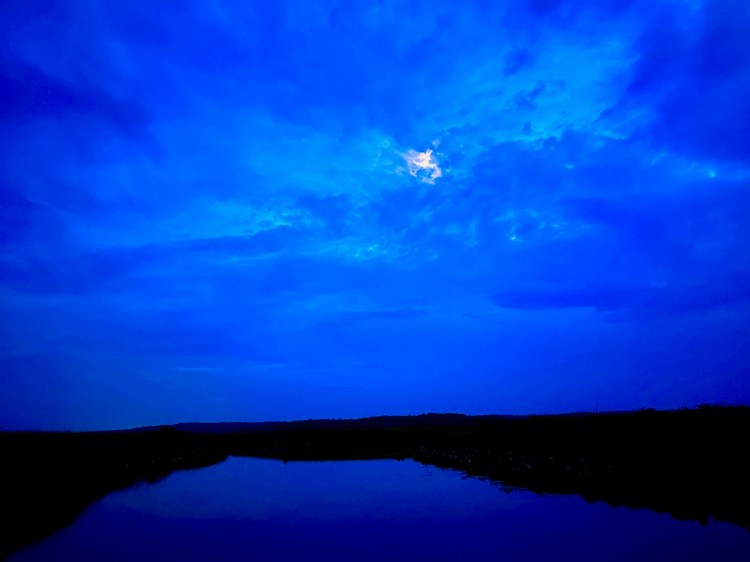
image: night water © Holly Troy 6.2025
Discover more from holly troy ~ sacred folly
Subscribe to get the latest posts sent to your email.
 holly troy ~ sacred folly
Not the first time that / a megalomaniac / tried to change the world
LikeLiked by 1 person