forbidden word: fetus
fetus
fetus, noun
plural, fetuses
(used chiefly of viviparous mammals) the young of an animal in the womb or egg, especially in the later stages of development when the body structures are in the recognizable form of its kind, in humans after the end of the second month of gestation.
fetus – scientific
The unborn offspring of a mammal at the later stages of its development, especially a human from eight weeks after fertilization to its birth. In a fetus, all major body organs are present.
fetus – cultural
The embryo of an animal that bears its young alive (rather than laying eggs). In humans, the embryo is called a fetus after all major body structures have formed; this stage is reached about sixty days after fertilization.
Etymology
Origin of fetus
First recorded in 1350–1400; Middle English, from Latin fētus “bringing forth of young,” hence “that which is born, offspring, young still in the womb,” equivalent to fē- (verb base attested in Latin only in noun derivatives, as fēmina “woman,” fēcundus “fertile,” fīlius “son,” fīlia “daughter,” etc.; compare Greek thēsthai “to suck, milk,” Old High German tāan “to suck,” Old Irish denid “(he) sucks,” Slavic (Polish) doić “to milk” + -tus suffix of verb action; fecund
from — Definition of fetus. (n.d.).
~ ~ ~
Example Sentences containing the word fetus
The show pairs the painting with a Kiki Smith sculpture, created over five decades later, that portrays the papery form of a woman from the waist down, her fetus dangling by an umbilical cord.
From The Wall Street Journal
Scientists have shown that this ratio reflects the balance of estrogen and testosterone a fetus is exposed to during the first trimester of pregnancy.
From Science Daily
Such tools could help detect consciousness in patients with brain injuries or dementia and determine when awareness arises in fetuses, animals, brain organoids, or even AI systems.
From Science Daily
Although prior immunity usually protects the fetus, routine screening is not available in some countries, highlighting the challenges of managing an infection that is widespread but often symptom-free.
From Science Daily
Concentrations in drinking water systems higher than 0.8 milligrams per liter can be harmful, especially to infants, young children and fetuses, according to the Environmental Protection Agency.
From Salon
from — Definition of fetus. (n.d.).
~ ~ ~
Trump imposes new NIH funding ban on human fetal tissue research
Agency may also be moving toward restricting use of embryonic stem cells
The National Institutes of Health (NIH) announced Thursday it will no longer fund research involving human fetal tissue from elective abortions. The widely anticipated decision, which could halt dozens of extramural projects, goes further than restrictions President Donald Trump imposed to satisfy abortion opponents during his first term.
“NIH is pushing American biomedical science into the 21st century,” agency Director Jayanta “Jay” Bhattacharya said in a statement announcing the change. “This decision is about advancing science by investing in breakthrough technologies more capable of modeling human health and disease.”
The new ban is “clearly a political decision” rather than a scientific one, says Lawrence Goldstein, a neuroscientist at the University of California (UC) San Diego and outspoken advocate of the research. The International Society for Stem Cell Research also objected to the new policy, which it calls “highly disruptive,” writing in a statement that human fetal tissue “remains a necessary tool for addressing certain research questions that cannot yet be adequately answered by organoids, tissue chips, and other emerging technologies.”
The policy takes effect immediately and applies to both intramural, or in-house projects, and extramural grants, NIH said. Although “NIH funds will not be permitted for research using” human fetal tissue, projects already in progress can continue if those funds are “rebudgeted” for other research, according to a notice outlining the policy. “NIH will work with the institutions to take appropriate steps to ensure compliance,” the agency press team wrote in an email to Science.
UC Los Angeles HIV researcher Jerome Zack, who has an affected project, said the “instantaneous nature” of the policy was a surprise and he expects to be told that ongoing experiments must stop. That “could be quite wasteful” for some lab work, such as animal studies, he says.
During Trump’s first term in office, the Department of Health and Human Services (HHS) banned NIH’s intramural scientists from conducting research using human fetal tissue, disrupting studies on HIV, cancer, and coronaviruses. The agency allowed university researchers with ongoing grants to continue, but those applying for new grants had to undergo a lengthy review by an ethics advisory board. That board, dominated by ethicists and scientists who opposed abortion, ultimately rejected the vast majority of proposals it reviewed. Former President Joe Biden’s administration later scrapped these restrictions.
In its announcement, NIH noted its funding of research using human fetal tissue has declined since 2018, with only 77 grants totaling $53 million—a small fraction of the agency’s $48 billion budget—supported in fiscal year 2024, a trend that likely reflects restrictions imposed during the first Trump administration. Nine of those projects are intramural and, according to multiple NIH sources, some do not currently use fetal tissue.
Of the roughly 60 extramural grants on the list that aren’t duplicates, work ranges from studies of HIV treatments that use mice with “humanized” immune systems to research on diabetes, cancer, and brain development. However, some of the studies have likely ended, and others may not have actually used the controversial material, according to reporting by Science in September 2025, when NIH said it would not renew funding for 17 active projects.
NIH described organoids, tissue chips, and other platforms as “robust alternatives” to human fetal tissue. But Zack says although “there are workarounds” for his research using humanized mice, “it is very difficult to answer some questions without using fetal tissue.” The new policy “will not shut us down, but it will set us back.” Another HIV researcher with grants on the list said if “proven alternatives” existed, he “would gladly use them.” The researcher, who asked not to be named because his institution had not cleared him to comment, adds: “In the end, we are sacrificing the best science in the name of politics.”
Goldstein says fetal tissue also provides unique insights into human development that cannot be replicated using other methods. “If you want to deduce the actual molecular features of human organ development during fetal stages and if you want to be sure you’re making the right kinds of cells from stem cells,” he says, “you need actual fetal tissue.” Although NIH funds are still permitted for research using tissue obtained from miscarriages and stillbirths, this material can be difficult to obtain and may not always be suitable for research, partly because a genetic abnormality may have caused the loss of the fetus.
NIH also said it will soon examine another ethically fraught research area: work using human embryonic stem cells, which in 2024 were used in more than 600 NIH projects totaling $322 million. But the agency appears to be moving more slowly than it has with fetal tissue. It plans to seek public comment on “technologies that could reduce or replace” the cells.
from — Jacobs, P. (2026, January 23). Trump imposes new NIH funding ban on human fetal tissue research. Science. Retrieved March 26, 2026
March 26, 2026
Hudson Valley, New York
This is one of the words/ phrases you can’t say in the new Trump Regime. See a comprehensive list at the Forbidden Words Project.
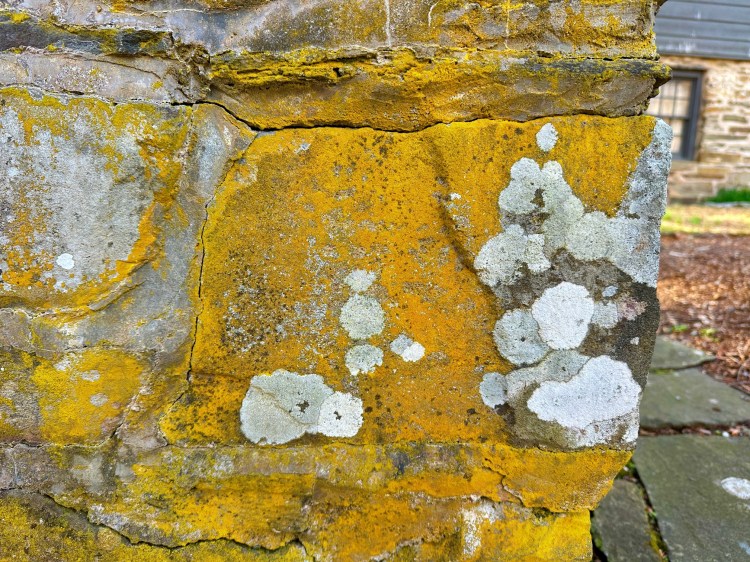
image: slow © Holly Troy 2025
There’s nothing “free” about banning words or ideas.
from — Connelly, E. A. (2025, December 22). Federal Government’s Growing Banned Words List Is Chilling Act of Censorship. PEN America.
Discover more from holly troy ~ sacred folly
Subscribe to get the latest posts sent to your email.
 holly troy ~ sacred folly