
forbidden word: water conservation
This is one of the terms you can’t say in the Trump Regime. See a comprehensive list at the Forbidden Words Project.
water conservation
Water conservation: facts, stats & ways to save.
What is water conservation?
Water conservation is the practice of using water efficiently to reduce unnecessary consumption and protect freshwater supplies. It covers household behavior, infrastructure repair, and the reuse of water for multiple purposes.
The US EPA estimates that household leaks alone waste nearly 900 billion gallons of water annually nationwide — making conservation both a personal and systemic priority. Roughly 30 percent of residential water use happens outdoors, and the average home loses 9,400 gallons a year to leaks that are often invisible.
What are the 5 R’s of water conservation?
Reduce, Reuse, Recycle, Repair, Rethink. Five actions that together cover how a household, a city, or a community can meet its water needs with less.
1. Reduce
Reducing water use is the highest-impact category. The EPA estimates that WaterSense-labeled faucets and aerators save the average family 700 gallons per year. Replacing an older toilet with a WaterSense-labeled model saves 13,000 gallons and $130 annually.
2. Reuse
Reuse means giving water a second job before it goes down the drain. Graywater — lightly used water from showers, baths, sinks, and washing machines — can be directed to landscape irrigation. Rain barrels capture rooftop runoff for garden use, cutting municipal water demand.
3. Recycle
Water recycling treats wastewater so it can be safely returned to use. Municipal reclaimed water supplies industrial cooling, landscape irrigation, and aquifer recharge. The EPA supports water reuse as a strategy for drought resilience and source-water protection.
4. Repair
The average household wastes 9,400 gallons of water per year from leaks, according to the EPA. Nationwide, household leaks total nearly 900 billion gallons annually. Fixing a single dripping faucet or running toilet can save thousands of gallons per year.
5. Rethink
Rethink treats conservation as a design choice, not a sacrifice. It includes choosing drought-tolerant landscaping, selecting water-efficient appliances at replacement time, and shifting daily habits. Rethinking use patterns compounds the other four R’s over years.
20 ways to conserve water at home
Twenty practical, EPA-backed actions. Start with two or three — small changes compound fast.
-
Turn off the tap while brushing teeth.Saves ~8 gallons per day (EPA)
-
Turn off the tap while shaving.Saves ~10 gallons per shave (EPA)
-
Fix leaky faucets promptly.Saves up to 3,000 gallons per leak/year
-
Install WaterSense-labeled bathroom faucets.700 gal saved per family annually
-
Install a WaterSense-labeled toilet.13,000 gallons & $130 per year (EPA)
-
Check for silent toilet leaks with food coloring.Can find leaks wasting 200+ gal/day
-
Take shorter showers.Cutting 2 min = ~1,825 gal/year per person
-
Wash only full loads of laundry.Saves 15–45 gallons per skipped load
-
Wash only full loads in the dishwasher.~320 gallons per year (EPA)
-
Don’t use the toilet as a wastebasket.Each flush wastes 1.6+ gallons
-
Insulate hot-water pipes.Less water wasted waiting for hot water
-
Check the water meter monthly for silent leaks.Detects otherwise-invisible waste
-
Water plants in early morning or evening.Reduces evaporation loss
-
Replace turf with drought-tolerant plants.Outdoor use = ~30% of household water
-
Apply mulch around plants.Retains soil moisture; cuts irrigation
-
Install a rain sensor on sprinklers.Prevents watering during or after rain
-
Audit your irrigation system yearly.Can waste 25,000 gal/year unaudited (EPA)
-
Use a broom, not a hose, for driveways.Saves ~60 gallons per cleaning
-
Capture rainwater with rain barrels.Free water for gardens and landscape
-
Cover swimming pools when not in use.Cuts evaporation by 90%+
The 5 core principles of water conservation
There is no single accepted list, but conservation is commonly organized around five core principles that together cover household, community, and environmental scale.
01 Household efficiency
Everyday indoor use. Behavior changes and WaterSense-labeled fixtures are the two main levers. The EPA estimates that replacing older toilets, faucets, and showerheads saves the average family more than 20,000 gallons per year combined.
02 Outdoor water management
Outdoor use accounts for roughly 30 percent of household water demand and rises sharply during summer. Drought-tolerant landscaping, mulching, early-morning watering, and rain sensors are the primary outdoor practices.
03 Infrastructure maintenance
Leaks and failing fixtures waste water invisibly. The EPA reports that household leaks alone waste nearly 900 billion gallons of water annually across the United States. Routine meter checks, prompt leak repair, and irrigation audits address this category.
04 Water quality protection
Prevents contamination of source water that would otherwise require costly treatment or be lost to use. Proper disposal of household chemicals, reduced pesticide use, and protection of watersheds all support this principle.
At home: do not pour paint, paint thinners, motor oil, antifreeze, pesticides, or ammonia-based cleaners down the drain. Households on septic systems face an even higher risk of leaching into groundwater, so fats, cooking oil, coffee grounds, and household chemicals should go in the trash rather than the sink or toilet.
05 Community participation
Extends conservation beyond the individual household. Supporting local water utilities, conservation policy, and organizations working on water access in water-scarce regions amplifies individual actions into shared outcomes.
from — Water conservation: facts, stats & ways to save. (n.d.). The Water Project. Retrieved August 7, 2026
~ ~ ~
Trump administration proposal threatens ability of states, tribes, and local communities to protect clean water, SELC says to EPA
EPA urged to abandon harmful proposal that fixes nothing, violates laws, and wastes taxpayer dollars
WASHINGTON — The Southern Environmental Law Center today warned EPA that its proposed rule regarding Section 401 of the Clean Water Act cuts states, tribes, and local communities’ ability to protect drinking water, rivers, streams, wetlands, and wildlife harmed by large federally permitted projects. SELC and 99 other organizations from across the country submitted comments to EPA that urged it to abandon the proposed rule. The administration’s proposal would make it harder for states and tribes to protect local water quality threatened by large projects, including data centers, hydropower dams, and new highways.
“This harmful proposal jeopardizes water resources important to states and tribes,” said Patrick Hunter, senior attorney at the Southern Environmental Law Center. “The Trump administration seeks to slash the ability of states and tribes to protect local waterways and drinking water sources threatened by large, federally permitted projects. In addition to jeopardizing communities’ clean water, the Trump administration’s new rulemaking wastes agency resources and public taxpayer dollars. It is an ideological solution in search of a problem.”
EPA nowhere points to problems with the existing rule that justify its new rulemaking. Worse, this rulemaking violates the Clean Water Act, Administrative Procedure Act, and binding Supreme Court precedent. By enabling increased pollution of our streams, rivers, lakes, and wetlands, it will ultimately increase the costs borne by ordinary Americans and their communities, businesses, and local and state governments, while damaging economically, culturally, and recreationally important resources. The overwhelming public response to the administration’s solicitation of examples of problematic application of the current rule was to ask EPA to leave the current rule in place.
SELC’s comments point out that despite the rhetoric from industry and the administration about the purported need for faster project approvals, the proposed rule leaves in place the existing time period to act on Section 401 certification requests. The proposed rule also will not result in fewer certification denials—only 0.8% of projects have been denied Section 401 certification under the existing rule. In fact, the Trump administration’s proposed rule risks increasing the number of denials as certifying authorities are left with fewer options to address pollution from proposed federally licensed and permitted projects.
The ability of states and tribes to protect water quality under Section 401 of the Clean Water Act had been in place since the 1970s, but it was curtailed severely under the first Trump administration before being restored in significant part by the Biden administration. Section 401 is intended to ensure that communities have a voice in federal projects and that local water quality concerns are not trampled by federal regulators. Upending decades of regulatory stability, EPA’s proposed rule is its third rulemaking regarding Section 401 of the Clean Water Act in six years.
###
About Southern Environmental Law Center
The Southern Environmental Law Center is one of the nation’s most powerful defenders of the environment, rooted in the South. With a long track record, SELC takes on the toughest environmental challenges in court, in government, and in our communities to protect our region’s air, water, climate, wildlife, lands, and people. Nonprofit and nonpartisan, the organization has a staff of 250, including more than 160 legal and policy experts and advocates, and is headquartered in Charlottesville, VA, with offices in Asheville, Atlanta, Birmingham, Chapel Hill, Charleston, Nashville, Richmond, and Washington, DC.
selc.org
from — Southern Environmental Law Center. (2026, February 18). Trump administration proposal threatens ability of states, tribes, and local communities to protect clean water, SELC says to EPA – Southern Environmental Law Center. Retrieved August 7, 2026
~ ~ ~
A Little-Known but Powerful Law
The National Historic Preservation Act protects our national heritage — but the administration has it in its crosshairs.
Right now, the Trump administration and Congress are proposing to remove environmental laws in order to streamline processes that pave the way for rapid energy development in protected landscapes and facilities across the country. All of this would come at the expense of places important to U.S. history and sites significant to Indigenous peoples. The proposed changes seek to consolidate power within the agencies and eliminate consultation and public input. We cannot let this happen.
All of the country’s more than 430 national parks hold significant historic places. Our public lands protect more than landscapes and wildlife; they comprise the homes of historical figures, sites sacred to Indigenous peoples, and key locations in the movements for equal rights. In fact, two-thirds of our national parks are designated historic and cultural sites.
Before the mid-1960s, few laws protected these spaces that hold our stories. Recognizing that important historic and cultural places were being lost amid the federally funded expansion of infrastructure and urban renewal projects, Congress passed the National Historic Preservation Act (NHPA) in 1966. Elected officials at the time understood that preservation was in the public’s interest and that a strong law was needed so future generations could appreciate and enjoy the rich heritage of our nation.
For 60 years, this foundational law has established roles and responsibilities for a federal historic preservation program, creating:
-
the National Register of Historic Places, managed in part by the National Park Service, which now includes more than 100,000 properties listed for their significance in U.S. history, art, architecture, engineering and culture.
-
an important Section 106 review process that requires consideration of historic preservation in the multitude of projects with federal involvement that take place across the nation every day.
-
funding for states, local governments and Tribes to preserve these places; and
-
an Advisory Council on Historic Preservation to advise the President of the United States and Congress on historic preservation.
For decades, NHPA and Section 106 have been at the heart of protecting historic places that tell our nation’s story and sacred places for Indigenous people. In holding the federal government accountable, Section 106 established state and Tribal historic preservation offices (1992), providing the opportunity for robust public participation to ensure the general public and organizations — like NPCA — can weigh in with expert knowledge and representation.
Advisory Council on Historic Preservation Proposes Weakening Protections for Parks, History, Tribal Resources
Gutting Section 106 regulations would weaken protections for public lands, weaken Tribal consultation requirements, and limit public input on development impacting…
The proposed draft completely changes the intention of Section 106, gutting the consultation process and giving the agency power to decide if public input is “useful.” The removal of language regarding consultation undermines Tribal sovereignty and federal trust responsibilities. In addition, making public input optional excludes the very communities who care for historic and cultural places in our nation.
The proposed revisions also change the definition of “historic properties,” limiting the cultural and historic places considered for protection in this process. For example, the language claims properties must have “past, tangible human improvements” and natural features such as mountains, bodies of water and landscapes do not apply. This type of language disregards Native peoples’ sacred sites and cultural landscapes holding traditional knowledge, natural and cultural resources.
Opportunities for improvement to Section 106 should not include cutting out Tribal Nations, the voting public and other partners or allow permits without the proper and important expert evaluation of each project’s impact on our historic and cultural places.
Here are just a few examples of parks saved because of NHPA and Section 106 — and a few of those still at risk if this bedrock environment law is ignored or revised.
Parklands Saved by Section 106
1. Glacier National Park
The lands between Blackfeet Nation and Glacier National Park, known as the Badger-Two Medicine region, remain undeveloped and preserved for future generations because the Advisory Council on Historic Preservation, which was created by NHPA, stepped in and affirmed the protection of national parks and Tribal traditional lands in 2015. Its decision followed an oil and gas company’s 2013 lawsuit demanding development of their lease. The last remaining federal oil and gas lease was retired in 2023.
2. Clara Barton National Historic Site

The Angel of Glen Echo
Clara Barton’s former home is in serious disrepair. Local historians shot down an insulting renovation plan—involving puppets—and are helping the Park Service more fully honor her history.
In 1974, Congress designated the first-ever national park site honoring a woman: Clara Barton, founder of the American Red Cross. After her home later fell into disrepair, the Great American Outdoors Act created the opportunity to restore it. Because of the Section 106 process, initial ideas for rehabilitation that didn’t fit Barton’s legacy were discarded. The process gave stakeholders such as NPCA, the National Trust for Historic Preservation and other historians the opportunity to speak up. As a result, the final renovation plans preserve this landmark to high standards so the history of the American Red Cross, Barton’s life and women’s history can be told.
3. Ocmulgee Mounds National Historic Park
In the 1990s, the state of Georgia proposed building a freeway extension that would have bisected the Ocmulgee National Monument. The Muscogee (Creek) Nation was able to argue that the affected area constituted a Traditional Cultural Property under the NHPA. The Keeper of the National Register recognized that the area was eligible for TCP status and that recognition eventually stopped the freeway from being built.
Parklands at Risk
1. Gates of the Arctic National Preserve
This Alaska park and its Western Arctic Caribou herd still face the threat of the proposed 211-mile Ambler mining road for commercial trucks that would destroy park landscapes. After the Trump administration fast-tracked permits that disregarded the NHPA process in 2020, a series of legal battles involving NPCA and Tribes ensued. Conservationists won twice in 2024, yet the Trump administration is taking unprecedented steps again to ignore previous rulings and force construction of the Ambler Road.
2. Organ Pipe National Monument and other Border Parks
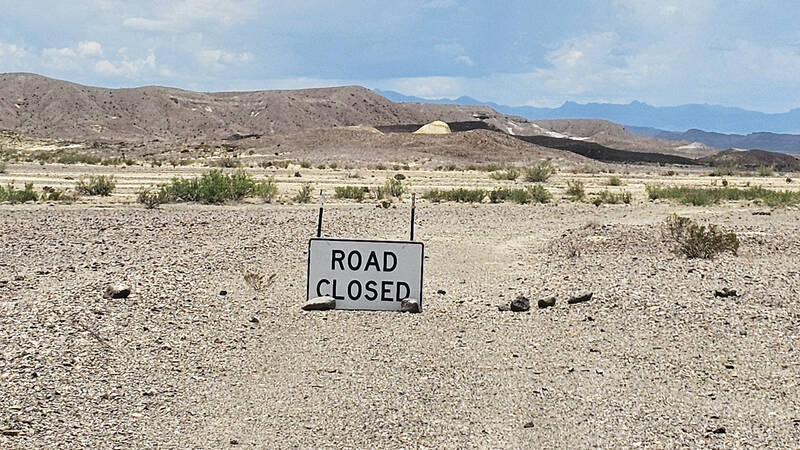
New Border Barriers Threaten Our National Parks. Communities Are Fighting Back
It all started in February, when eagle-eyed park advocates noticed that the Trump administration had quietly made changes to an online map.
The federal government has waived the NHPA in several cases along the U.S.-Mexico border during wall construction. In Arizona, the Department of Homeland Security waived bedrock environmental laws to build a border wall in Organ Pipe National Monument during the first Trump administration and now is using the same waivers to build a second wall, which could cause irreversible damage to Quitobaquito Springs, a desert oasis known to be sacred to the O’doham peoples. Similarly, the NHPA is being waived at Coronado National Memorial and Big Bend National Park.
3. National Mall and Memorial Parks
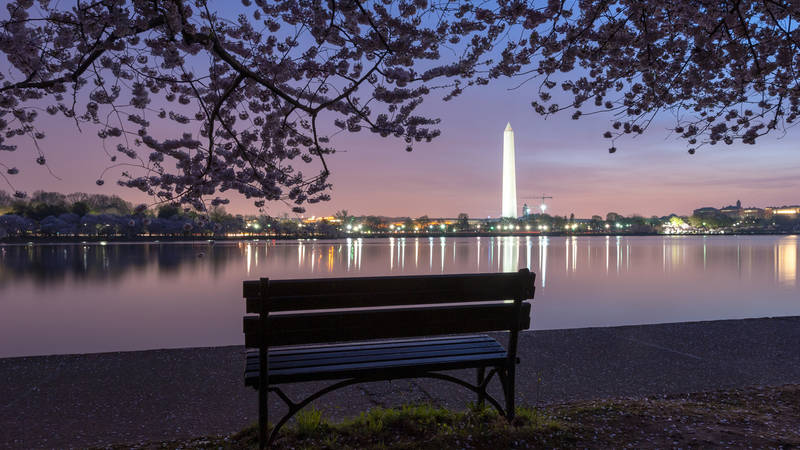
The National Mall in Washington, D.C. now faces an unprecedented wave of construction proposals, including a 250-foot triumphal arch between the carefully composed landscape connecting the Lincoln Memorial and Arlington National Cemetery. The Section 106 process is the public’s primary opportunity to weigh in on whether a monument of this scale belongs in one of the most historically significant viewsheds in the country. NPCA is participating as a consulting party, but proposals to weaken the law could allow projects like this, along with commercial development pressures across the Mall, to move forward without meaningful review of their effects on the memorials, landscapes and stories the Mall was designed to protect.
4. Mojave Desert
In July, the Trump administration issued a new pipeline permit for Cadiz Inc. without conducting its legally required review of the significant groundwater depletion that the project is expected to cause — this, despite a 2022 federal court decision that confirmed the Bureau of Land Management did not consult with Tribal Nations as required by NPHA when granting a permit in 2020 and ordered the permit revoked. The Chemehuevi and Fort Mojave Indian Tribes who have lived in and called this area of the Mojave Desert home since time immemorial have opposed the project for decades. NPCA will continue opposing this project.
August 6th, 2026
Hudson Valley, New York
This is one of the words/ phrases you can’t say in the new Trump Regime. See a comprehensive list at the Forbidden Words Project.
image: sunset border © holly troy 7.2026
Discover more from holly troy ~ sacred folly
Subscribe to get the latest posts sent to your email.
Human beings know / water conservation is / essential for life