forbidden words: carbon sequestration
carbon sequestration
carbon sequestration noun
the prevention of greenhouse gas build-up in the earth’s atmosphere by methods such as planting trees to absorb carbon dioxide or pumping carbon dioxide into underground reservoirs
from — Definition of carbon sequestration. (n.d.). dictionary.com
~ ~ ~
example sentences: carbon sequestration
The farm also collects quantifiable data for soil carbon sequestration.
From Barron’s
“The bacteria and fungi and other organisms living in the soil can actually end up having important effects on things that matter, like carbon sequestration, nutrient movement and what we’re particularly interested in — the legacy effects on plants,” said co-author Maggie Wagner, associate professor of ecology & evolutionary biology at the University of Kansas.
From Science Daily
Arbor portrays its solution as a flexible, carbon-negative and clean device: It can operate anywhere with a hookup for carbon sequestration.
From Los Angeles Times
California has billed Arbor — and the handful of other similarly aimed projects it’s financed — as a win-win-win: wildfire mitigation, clean energy and carbon sequestration all in one.
From Los Angeles Times
The latest research looked at data stretching back to the 1920s to quantify this carbon storage, also called carbon sequestration.
From BBC
from — Definition of carbon sequestration. (n.d.). dictionary.com
~ ~ ~
carbon sequestration
Carbon sequestration is a natural process of storing carbon in a carbon pool.[2]: 2248 It plays a crucial role in effectively managing the global carbon cycle and limiting climate change by reducing the amount of carbon dioxide in the atmosphere. There are two main types of carbon sequestration: biologic (also called biosequestration) and geologic.[3]
Biologic carbon sequestration is a naturally occurring process as part of the carbon cycle. Humans can enhance it through deliberate actions and use of technology. Carbon dioxide (CO
2) is naturally captured from the atmosphere through biological, chemical, and physical processes. These processes can be accelerated for example through changes in land use and agricultural practices, called carbon farming. Artificial processes have also been devised to produce similar effects. This approach is called carbon capture and storage. It involves using technology to capture and sequester (store) CO
2 that is produced from human activities underground or under the sea bed.
Plants, such as forests and kelp beds, absorb carbon dioxide from the air as they grow, and bind it into biomass. However, these biological stores may be temporary carbon sinks, as long-term sequestration cannot be guaranteed. Wildfires, disease, economic pressures, and changing political priorities may release the sequestered carbon back into the atmosphere.[4]
Carbon dioxide that has been removed from the atmosphere can also be stored in the Earth’s crust by injecting it underground, or in the form of insoluble carbonate salts. The latter process is called mineral sequestration. These methods are considered non-volatile because they not only remove carbon dioxide from the atmosphere but also sequester it indefinitely. This means the carbon is “locked away” for thousands to millions of years.
To enhance carbon sequestration processes in oceans the following chemical or physical technologies have been proposed: ocean fertilization, artificial upwelling, basalt storage, mineralization and deep-sea sediments, and adding bases to neutralize acids.[5] However, none have achieved large scale application so far. Large-scale seaweed farming on the other hand is a biological process and could sequester significant amounts of carbon.[6] The potential growth of seaweed for carbon farming would see the harvested seaweed transported to the deep ocean for long-term burial.[7] The IPCC Special Report on the Ocean and Cryosphere in a Changing Climate recommends “further research attention” on seaweed farming as a mitigation tactic.[8]
Terminology
The term carbon sequestration has diverse meanings in the literature and media. The IPCC Sixth Assessment Report defines carbon sequestration as “The process of storing carbon in a carbon pool”.[9]: 2248 Subsequently, a pool is defined as “a reservoir in the Earth system where elements, such as carbon and nitrogen, reside in various chemical forms for a period of time”.[9]: 2244
The United States Geological Survey (USGS) defines carbon sequestration as follows: “Carbon sequestration is the process of capturing and storing atmospheric carbon dioxide.”[3] Because the wording in this definition makes it very similar to the definition of carbon capture and storage (CCS), carbon sequestration is sometimes confounded with CCS (the IPCC defines CCS as “a process in which a relatively pure stream of carbon dioxide (CO2) from industrial sources is separated, treated and transported to a long-term storage location” [9]: 2221 ).
Roles
In nature
Carbon sequestration is part of the natural carbon cycle by which carbon is exchanged among the biosphere, pedosphere (soil), geosphere, hydrosphere, and atmosphere of Earth.[10] Carbon dioxide is naturally captured from the atmosphere through biological, chemical, or physical processes, and stored in long-term reservoirs.
Plants, such as forests and kelp beds, absorb carbon dioxide from the air as they grow, and bind it into biomass. However, these biological stores are considered volatile carbon sinks as long-term sequestration cannot be guaranteed. Events such as wildfires or disease, economic pressures, and changing political priorities can result in the sequestered carbon being released back into the atmosphere.[4]
In climate change mitigation and policies
Carbon sequestration, which acts as a carbon sink, helps to mitigate climate change and thus reduce harmful effects of climate change. It helps to slow the atmospheric and marine accumulation of greenhouse gases, which is mainly carbon dioxide released by burning fossil fuels.[11]
Carbon sequestration for climate change mitigation can involve either enhancing natural carbon sinks or employing technological methods to capture and store carbon.
Within the carbon capture and storage approaches, carbon sequestration refers to the storage component. Artificial carbon storage technologies can be applied, such as gaseous storage in deep geological formations (including saline formations and exhausted gas fields), and solid storage by reaction of CO2 with metal oxides to produce stable carbonates.[12]
For carbon to be sequestered artificially—that is, outside the natural processes of the carbon cycle—it must first be captured, or its release into the atmosphere must be significantly delayed or prevented. This can be achieved by incorporating carbon-rich materials into long-lasting applications, such as construction, thereby avoiding release through processes like combustion or decay. Thereafter it can be passively stored or remain productively utilized over time in a variety of ways. For instance, upon harvesting, wood (as a carbon-rich material) can be incorporated into construction or a range of other durable products, thus sequestering its carbon over years or even centuries.[13] In industrial production, engineers typically capture carbon dioxide from emissions from power plants or factories.
For example, in the United States, the Executive Order 13990 (officially titled “Protecting Public Health and the Environment and Restoring Science to Tackle the Climate Crisis”) from 2021, includes several mentions of carbon sequestration via conservation and restoration of carbon sink ecosystems, such as wetlands and forests. The document emphasizes the importance of farmers, landowners, and coastal communities in carbon sequestration. It directs the Treasury Department to promote conservation of carbon sinks through market based mechanisms.[14]
Noting that the planet’s carbon sequestration capacity is not unlimited, a 2025 study concluded that fully using Earth’s geologic storage capacity would help limit global warming by only 0.7 °C (1.3 °F).[15]
Biological carbon sequestration on land
Biological carbon sequestration (also called biosequestration) is the capture and storage of the atmospheric greenhouse gas carbon dioxide by continual and enhanced biological processes. This form of carbon sequestration occurs through increased rates of photosynthesis via land-use practices such as reforestation and sustainable forest management.[16][17] Land-use changes that enhance natural carbon capture have the potential to capture and store large amounts of carbon dioxide each year. These include the conservation, management, and restoration of ecosystems such as forests, peatlands, wetlands, and grasslands, in addition to carbon sequestration methods in agriculture.[18] Methods and practices exist to enhance soil carbon sequestration in both agriculture and forestry.[19][20][21]
Forestry
Forests are an important part of the global carbon cycle because trees and plants absorb carbon dioxide through photosynthesis. Therefore, they play an important role in climate change mitigation.[23]: 37 By removing the greenhouse gas carbon dioxide from the air, forests function as terrestrial carbon sinks, meaning they store large amounts of carbon in the form of biomass, encompassing roots, stems, branches, and leaves. By doing so, forests sequester approximately 25% of human carbon emissions annually, playing a critical role in Earth’s climate.[24] Throughout their lifespan, trees continue to sequester carbon, storing atmospheric CO2 long-term.[25] Sustainable forest management, afforestation, reforestation are therefore important contributions to climate change mitigation.
An important consideration in such efforts is that forests can turn from sinks to carbon sources.[26][27] In 2019 forests took up a third less carbon than they did in the 1990s, due to higher temperatures, droughts[28] and deforestation. National-scale forest inventory data also shows trends from 1999 to 2020 that some forests were already approaching climate thresholds shifting them from carbon sinks to carbon sources.[24] The typical tropical forest may become a carbon source by the 2060s.[29]
Researchers have found that, in terms of environmental services, it is better to avoid deforestation than to allow for deforestation to subsequently reforest, as the latter leads to irreversible effects in terms of biodiversity loss and soil degradation.[30] Furthermore, the probability that legacy carbon will be released from soil is higher in younger boreal forest.[31] In particular, boreal forests have been noted to support the growth of Armillaria (honey fungus), which is a root pathogen that breaks down compounds necessary for wood integrity, increasing the likelihood of carbon release.[32] Global greenhouse gas emissions caused by damage to tropical rainforests may have been substantially underestimated until around 2019.[33] Additionally, the effects of afforestation and reforestation will be farther in the future than keeping existing forests intact.[34] It takes much longer − several decades − for the benefits for global warming to manifest to the same carbon sequestration benefits from mature trees in tropical forests and hence from limiting deforestation.[35] Therefore, scientists consider “the protection and recovery of carbon-rich and long-lived ecosystems, especially natural forests” to be “the major climate solution“.[36]
The planting of trees on marginal crop and pasture lands helps to incorporate carbon from atmospheric CO
2 into biomass.[37][38] For this carbon sequestration process to succeed the carbon must not return to the atmosphere from biomass burning or rotting when the trees die.[39] Several species of Ficus such as Ficus wakefieldii have been observed to sequester atmospheric CO2 as calcium oxalate in the presence of oxalotrophic bacteria and fungi, which catabolize the oxalate, which produces calcium carbonate.[40] The calcium carbonate is precipitated throughout the tree, which also alkalinizes the surrounding soil. These species are current candidates for carbon sequestration in agroforestry. This Calcium-oxalate fixation process was first observed in the Iroko tree, which can sequester up to a ton of calcium carbonate in the soil over its lifespan. Also Cacti, such as the Saguaro, transfer carbon from the biological cycle to the geological cycle by forming the mineral calcium carbonate.[41]
Earth offers enough room to plant an additional 0.9 billion ha of tree canopy cover, although this estimate has been criticized,[42][43] and the true area that has a net cooling effect on the climate when accounting for biophysical feedbacks like albedo is 20-80% lower.[44][45] Planting and protecting these trees would sequester 205 billion tons of carbon if the trees survive future climate stress to reach maturity.[46][45] To put this number into perspective, this is about 20 years of current global carbon emissions (as of 2019) .[47] This level of sequestration would represent about 25% of the atmosphere’s carbon pool in 2019.[45]
Life expectancy of forests varies throughout the world, influenced by tree species, site conditions, and natural disturbance patterns. In some forests, carbon may be stored for centuries, while in other forests, carbon is released with frequent stand replacing fires. Forests that are harvested prior to stand replacing events allow for the retention of carbon in manufactured forest products such as lumber.[48] However, only a portion of the carbon removed from logged forests ends up as durable goods and buildings. The remainder ends up as sawmill by-products such as pulp, paper, and pallets.[49] If all new construction globally utilized 90% wood products, largely via adoption of mass timber in low rise construction, this could sequester 700 million net tons of carbon per year.[50][51] This is in addition to the elimination of carbon emissions from the displaced construction material such as steel or concrete, which are carbon-intense to produce.
A meta-analysis found that mixed species plantations would increase carbon storage alongside other benefits of diversifying planted forests.[52]
Although a bamboo forest stores less total carbon than a mature forest of trees, a bamboo plantation sequesters carbon at a much faster rate than a mature forest or a tree plantation. Therefore, the farming of bamboo timber may have significant carbon sequestration potential.[53]
The Food and Agriculture Organization (FAO) reported that: “The total carbon stock in forests decreased from 668 gigatonnes in 1990 to 662 gigatonnes in 2020”.[22]: 11 In Canada’s boreal forests as much as 80% of the total carbon is stored in the soils as dead organic matter.[54][globalize]
The IPCC Sixth Assessment Report says: “Secondary forest regrowth and restoration of degraded forests and non-forest ecosystems can play a large role in carbon sequestration (high confidence) with high resilience to disturbances and additional benefits such as enhanced biodiversity.”[55][56]
Impacts on temperature are affected by the location of the forest. For example, reforestation in boreal or subarctic regions has less impact on climate. This is because it substitutes a high-albedo, snow-dominated region with a lower-albedo forest canopy. By contrast, tropical reforestation projects lead to a positive change such as the formation of clouds. These clouds then reflect the sunlight, lowering temperatures.[57]: 1457
Planting trees in tropical climates with wet seasons has another advantage. In such a setting, trees grow more quickly (fixing more carbon) because they can grow year-round. Trees in tropical climates have, on average, larger, brighter, and more abundant leaves than non-tropical climates. A study of the girth of 70,000 trees across Africa has shown that tropical forests fix more carbon dioxide pollution than previously realized. The research suggested almost one-fifth of fossil fuel emissions are absorbed by forests across Africa, Amazonia and Asia. Simon Lewis stated, “Tropical forest trees are absorbing about 18% of the carbon dioxide added to the atmosphere each year from burning fossil fuels, substantially buffering the rate of change.”[58][obsolete source]
Wetlands
Wetland restoration involves restoring a wetland’s natural biological, geological, and chemical functions through re-establishment or rehabilitation.[60] It is a good way to reduce climate change.[61] Wetland soil, particularly in coastal wetlands such as mangroves, sea grasses, and salt marshes,[61] is an important carbon reservoir; 20–30% of the world’s soil carbon is found in wetlands, while only 5–8% of the world’s land is composed of wetlands.[62] Studies have shown that restored wetlands can become productive CO2 sinks[63][64][65] and many are being restored.[66][67] Aside from climate benefits, wetland restoration and conservation can help preserve biodiversity, improve water quality, and aid with flood control.[68]
The plants that make up wetlands absorb carbon dioxide (CO2) from the atmosphere and convert it into organic matter. The waterlogged nature of the soil slows down the decomposition of organic material, resulting in the accumulation of carbon-rich sediments,[clarification needed] that act as a long-term carbon sink.[69][70] Additionally, anaerobic conditions in waterlogged soils hinder the complete breakdown of organic matter, promoting the conversion of carbon into more stable forms.[70]
As with forests, for the sequestration process to succeed, the wetland must remain undisturbed. If it is disturbed the carbon stored in the plants and sediments will be released back into the atmosphere, and the ecosystem will no longer function as a carbon sink.[71] Additionally, some wetlands can release non-CO2 greenhouse gases, such as methane[72] and nitrous oxide[73] which could offset potential climate benefits. The amounts of carbon sequestered via blue carbon by wetlands can also be difficult to measure.[68]
Wetland soil is an important carbon sink; 14.5% of the world’s soil carbon is found in wetlands, while only 5.5% of the world’s land is composed of wetlands.[74] Not only are wetlands a great carbon sink, they have many other benefits like collecting floodwater, filtering out air and water pollutants, and creating a home for numerous birds, fish, insects, and plants.[75]
Climate change could alter wetland soil carbon storage, changing it from a sink to a source.[76][obsolete source]With rising temperatures comes an increase in greenhouse gasses from wetlands especially locations with permafrost. When this permafrost melts it increases the available oxygen and water in the soil.[76] Because of this, bacteria in the soil would create large amounts of carbon dioxide and methane to be released into the atmosphere.[76][obsolete source]
The link between climate change and wetlands is still not fully known.[76][obsolete source]It is also not clear how restored wetlands manage carbon while still being a contributing source of methane. However, preserving these areas would help prevent further release of carbon into the atmosphere.[77]
Peatlands, mires and peat bogs
Despite occupying only 3% of the global land area, peatlands hold approximately 30% of the carbon in our ecosystem – twice the amount stored in the world’s forests.[77][78] Most peatlands are situated in high latitude areas of the northern hemisphere, with most of their growth occurring since the last ice age,[79] but they are also found in tropical regions, such as the Amazon and Congo Basin.[80]
Peatlands grow steadily over thousands of years, accumulating dead plant material – and the carbon contained within it – due to waterlogged conditions which greatly slow rates of decay.[79] If peatlands are drained, for farmland or development, the plant material stored within them decomposes rapidly, releasing stored carbon. These degraded peatlands account for 5-10% of global carbon emissions from human activities.[79][81] The loss of one peatland could potentially produce more carbon than 175–500 years of methane emissions.[76]
Peatland protection and restoration are therefore important measures to mitigate carbon emissions, and also provide benefits for biodiversity,[81] freshwater provision, and flood risk reduction.[82]
Agriculture
Compared to natural vegetation, cropland soils are depleted in soil organic carbon (SOC). When soil is converted from natural land or semi-natural land, such as forests, woodlands, grasslands, steppes, and savannas, the SOC content in the soil reduces by about 30–40%.[83] This loss is due to harvesting, as plants contain carbon. When land use changes, the carbon in the soil will either increase or decrease, and this change will continue until the soil reaches a new equilibrium. Deviations from this equilibrium can also be affected by variated[clarification needed] climate.[84]
The decreasing of SOC content can be counteracted by increasing the carbon input. This can be done with several strategies, e.g. leave harvest residues on the field, use manure as fertilizer, or include perennial crops in the rotation. Perennial crops have a larger below-ground biomass fraction, which increases the SOC content.[83]
Perennial crops reduce the need for tillage and thus help mitigate soil erosion, and may help increase soil organic matter. Globally, soils are estimated to contain >8,580 gigatons of organic carbon, about ten times the amount in the atmosphere and much more than in vegetation.[85]
Researchers have found that rising temperatures can lead to population booms in soil microbes, converting stored carbon into carbon dioxide. In laboratory experiments heating soil, fungi-rich soils released less carbon dioxide than other soils.[86]
Following carbon dioxide (CO2) absorption from the atmosphere, plants deposit organic matter into the soil.[25] This organic matter, derived from decaying plant material and root systems, is rich in carbon compounds. Microorganisms in the soil break down this organic matter, and in the process, some of the carbon becomes further stabilized in the soil as humus – a process known as humification.[87]
On a global basis, it is estimated that soil contains about 2,500 gigatons of carbon.[contradictory]This is greater than 3-fold the carbon found in the atmosphere and 4-fold of that found in living plants and animals.[88] About 70% of the global soil organic carbon in non-permafrost areas is found in the deeper soil within the upper metre and is stabilized by mineral-organic associations.[89]
Carbon farming
Carbon farming is a set of agricultural methods that aim to store carbon in the soil and biomass. The technical term for this is carbon sequestration. The overall goal of carbon farming is to create a net loss of carbon from the atmosphere.[90] This is done by increasing the rate at which carbon is sequestered into soil and plant material. The increase of biomass from roots and the soil’s microbiome leads to an increase in the organic matter content of the soil. Increasing organic matter content in soils aids plant growth, improves soil water retention capacity[91] and reduces fertilizer use.[92] Sustainable forest management is another tool that is used in carbon farming.[93] Carbon farming is one component of climate-smart agriculture. It is also one way to remove carbon dioxide from the atmosphere.
Agricultural methods for carbon farming include adjusting how tillage and livestock grazing is done, using organic mulch or compost, working with biochar and terra preta, and changing the crop types. Methods used in forestry include reforestation and bamboo farming. As of 2016, variants of carbon farming reached hundreds of millions of hectares globally, of the nearly 5 billion hectares (1.2×10¹⁰ acres) of world farmland.[94]
Carbon farming tends to be more expensive than conventional agricultural practices. Depending on the region, carbon farmings costs US$3-130 per tonne of carbon dioxide sequestered.[95] Some countries provide subsidies to farmers to use carbon farming methods.[96] While the implementation of carbon farming methods can reduce/sequester emissions, it is important to also consider the effects of land use changes with respect to the conversion of forests to agricultural production.[97]
Prairies
Prairie restoration is a conservation effort to restore prairie lands that were destroyed due to industrial, agricultural, commercial, or residential development.[98] The primary aim is to return areas and ecosystems to their previous state before their depletion.[99] The mass of SOC able to be stored in these restored plots is typically greater than the previous crop, acting as a more effective carbon sink.[100][101]
Biochar
Biochar is charcoal created by pyrolysis of biomass waste. The resulting material is added to a landfill or used as a soil improver to create terra preta.[102][103] Adding biochar may increase the soil-C stock for the long term and so mitigate global warming by offsetting the atmospheric C (up to 9.5 Gigatons C annually).[104] In the soil, the biochar carbon is unavailable for oxidation to CO
2 and consequential atmospheric release. However concerns have been raised about biochar potentially accelerating release of the carbon already present in the soil.[105][needs update]
Terra preta, an anthropogenic, high-carbon soil, is also being investigated as a sequestration mechanism. By pyrolysing biomass, about half of its carbon can be reduced to charcoal, which can persist in the soil for centuries, and makes a useful soil amendment, especially in tropical soils (biochar or agrichar).[106][107]
Burial of biomass
Burying biomass (such as trees) directly mimics the natural processes that created fossil fuels.[108] The global potential for carbon sequestration using wood burial is estimated to be 10 ± 5 GtC/yr and largest rates in tropical forests (4.2 GtC/yr), followed by temperate (3.7 GtC/yr) and boreal forests (2.1 GtC/yr).[13] In 2008, Ning Zeng of the University of Maryland estimated 65 GtC[needs update] lying on the floor of the world’s forests as coarse woody material which could be buried and costs for wood burial carbon sequestration run at US$50/tC which is much lower than carbon capture from e.g. power plant emissions.[13] CO2 fixation into woody biomass is a natural process carried out through photosynthesis. This is a nature-based solution and methods being trialled include the use of “wood vaults” to store the wood-containing carbon under oxygen-free conditions.[109]
In 2022, a certification organization published methodologies for biomass burial.[110] Other biomass storage proposals have included the burial of biomass deep underwater, including at the bottom of the Black Sea.[111]
read (it’s fascinating) more at — Wikipedia contributors. (2026, January 2). Carbon sequestration. Wikipedia.
~ ~ ~
carbon
carbon noun
-
Chemistry. a widely distributed element that forms organic compounds in combination with hydrogen, oxygen, etc., and that occurs in a pure state as diamond and graphite, and in an impure state as charcoal. C; 12.011; 6; (of diamond) 3.51 at 20°C; (of graphite) 2.26 at 20°C.
-
carbon dioxide or other carbon compounds that are emitted into the atmosphere and cause rising temperatures.
the carbon produced by burning fossil fuels.
-
a sheet of carbon paper.
-
Electricity.
-
the carbon rod through which current is conducted between the electrode holder and the arc in carbon arc lighting or welding.
-
the rod or plate, composed in part of carbon, used in batteries.
-
carbon, adj
pertaining to or noting the element carbon or any of its compounds, especially carbon dioxide.
to reduce carbon emissions.
Discover More
Carbon forms the basis for all living tissue.
Other Word Forms
- carbonless adjective
- carbonous adjective
- noncarbon noun
Etymology
Origin of carbon
1780–90; < French carbone, coinage based on Latin carbōn- (stem of carbō ) charcoal
from — Definition of carbon. (n.d.). Dictionary.com
~ ~
sequestration
sequestration noun
-
removal or separation; banishment or exile.
-
a withdrawal into seclusion; retirement.
-
segregation from others; isolation.
sequestration of jurors during a trial.
-
Law.
-
the sequestering of property.
- confiscation or seizure.
-
-
Chemistry. the combining of metallic ions with a suitable reagent into a stable, soluble complex in order to prevent the ions from combining with a substance with which they would otherwise have formed an insoluble precipitate, from causing interference in a particular reaction, or from acting as undesirable catalysts.
-
the trapping of a chemical in the atmosphere or environment and its isolation in a natural or artificial storage area.
Carbon sequestration can reduce global warming.
-
a. the process of implementing an automatic cut in government spending across most departments, agencies, etc..
efforts to avoid or delay sequestration.
b. an instance of this.
An $80 billion sequestration would lead to massive layoffs.
Other Word Forms
- nonsequestration noun
Etymology
Origin of sequestration
1350–1400; Middle English < Late Latin sequestrātiōn- (stem of sequestrātiō ), equivalent to sequestrāt ( us ) (past participle of sequestrāre to sequester ) + -iōn- -ion
from — Definition of sequestration. (n.d.). — dictionary.com
January 6th, 2025
Hudson Valley, New York
This is one of the words/ phrases you can’t say in the new Trump Regime. See a comprehensive list at the Forbidden Words Project.
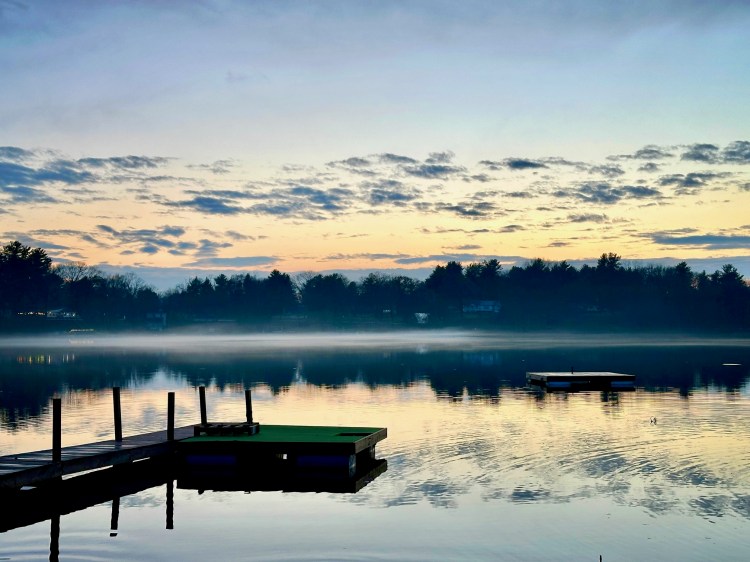
image: misty lake © Holly Troy 2025
Our list is most assuredly incomplete. The New York Times published a list of words flagged by federal agencies to ban, limit, or avoid. Additional terms were reported by Politico, Reuters, The Washington Post, Propublica, Science, Gizmodo, 404 Media, Popular Information, Politico’s E&E News and the nonprofit news outlet More Perfect Union. These have been aggregated into a single list, below, which also reflects guidance from the Centers for Disease Control and Prevention, the Department of Agriculture, the Department of Defense, Department of Energy, the Federal Emergency Management Agency, the Food and Drug Administration, NASA, the National Cancer Institute, the National Security Agency, the National Science Foundation, and the White House itself.
from — Connelly, E. A. (2025, December 22). Federal Government’s Growing Banned Words List Is Chilling Act of Censorship. PEN America.
Discover more from holly troy ~ sacred folly
Subscribe to get the latest posts sent to your email.
 holly troy ~ sacred folly
Reforestation / makes carbon sequestration; / both make me joyful
LikeLiked by 1 person