
forbidden words: climate models
climate models
from NOAA Climate.gov: Climate Models*
Climate models are based on well-documented physical processes to simulate the transfer of energy and materials through the climate system. Climate models, also known as general circulation models or GCMs, use mathematical equations to characterize how energy and matter interact in different parts of the ocean, atmosphere, land. Building and running a climate model is complex process of identifying and quantifying Earth system processes, representing them with mathematical equations, setting variables to represent initial conditions and subsequent changes in climate forcing, and repeatedly solving the equations using powerful supercomputers.
Check out The Very, Very Simple Climate Model »
Climate Model Resolution
Climate models separate Earth’s surface into a three-dimensional grid of cells. The results of processes modeled in each cell are passed to neighboring cells to model the exchange of matter and energy over time. Grid cell size defines the resolution of the model: the smaller the size of the grid cells, the higher the level of detail in the model. More detailed models have more grid cells, so they need more computing power.
See an animation showing different grid sizes »
Climate models also include the element of time, called a time step. Time steps can be in minutes, hours, days, or years. Like grid cell size, the smaller the time step, the more detailed the results will be. However, this higher temporal resolution requires additional computing power.
How are Climate Models Tested?
Once a climate model is set up, it can be tested via a process known as “hind-casting.” The model is initialized to known conditions at a time in the past: many models focus on the pre-industrial conditions present in 1850. The model run begins, and inputs of historical solar intensity, volcanic activity, and greenhouse gas levels update the model environment to reflect actual conditions at each time step. The model results are then compared with observed conditions to see how well they match. This testing allows scientists to check the accuracy of the models and address areas that need improvement. Science teams around the world regularly test and compare their model outputs to observations and results from other models.
You can learn more about how climate models are tested and tuned in a paper from the Bulletin of the American Meteorological Society (BAMS), The Art and Science of Model Tuning »
Using Scenarios to Predict Future Climate
Once a climate model can perform well in hind-casting tests, its results for simulating future climate are also assumed to be valid. To project climate into the future, the climate forcing is set to change according to a possible future scenario. Scenarios are possible stories about how quickly human population will grow, how land will be used, how economies will evolve, and the atmospheric conditions (and therefore, climate forcing) that would result for each storyline.
In 2000, the Intergovernmental Panel on Climate Change (IPCC) issued its Special Report on Emissions Scenarios (SRES), describing four scenario families to describe a range of possible future conditions. Referred to by letter-number combinations such as A1, A2, B1, and B2, each scenario was based on a complex relationship between the socioeconomic forces driving greenhouse gas and aerosol emissions and the levels to which those emissions would climb during the 21st century. The SRES scenarios have been in use for more than a decade, so many climate model results describe their inputs using the letter-number combinations.
In 2013, climate scientists agreed upon a new set of scenarios that focused on the level of greenhouse gases in the atmosphere in 2100. Collectively, these scenarios are known as Representative Concentration Pathways or RCPs. Each RCP indicates the amount of climate forcing, expressed in Watts per square meter, that would result from greenhouse gases in the atmosphere in 2100. The rate and trajectory of the forcing is the pathway. Like their predecessors, these values are used in setting up climate models.
Results of Current Climate Models
Around the world, different teams of scientists have built and run models to project future climate conditions under various scenarios for the next century. So the groups can make a fair comparison of their results, they run the same experiment. Because each climate model is slightly different, the results show a range of projections. Though yearly values projected for temperature and precipitation differ among the models, the trend and magnitude of change is fairly consistent.
Global climate model results from groups around the world project that global temperature will continue to increase. They also show that human decisions and behavior we choose today will determine how dramatically climate will change in the future.
How are Climate Models Different from Weather Prediction Models?
Unlike weather forecasts, which describe a detailed picture of the expected daily sequence of conditions starting from the present, climate models are probabilistic, indicating areas with higher chances to be warmer or cooler and wetter or drier than usual. Climate models are based on global patterns in the ocean and atmosphere, and records of the types of weather that occurred under similar patterns in the past.
View maps showing short-term climate forecasts »
from — Climate models. (n.d.). NOAA Climate.gov.
* This website is an ARCHIVED version of NOAA Climate.gov as of June 25, 2025.
Content is not being updated or maintained, and some links may no longer work.
~ ~ ~
climate models
What is a climate model?
A climate model is a computer simulation of the Earth’s climate system, including the atmosphere, ocean, land and ice. They can be used to recreate the past climate or predict the future climate.
Climate models calculate many different properties of the climate, including atmospheric temperature, pressure, wind, and humidity. The models calculate these properties for thousands and thousands of different points on a three-dimensional grid. In fact, there are so many mathematical equations involved that a typical climate model includes enough code to fill 18,000 pages of printed text.
By solving the relevant mathematical equations, the climate model is able to calculate how the state of the atmosphere and ocean evolves over time.
Why use climate models?
Climate models help scientists to test their understanding of our climate system, and to predict future changes to our climate.
Scientists use climate models to evaluate their understanding of the climate, and test out their ideas. For example, they could run a simulation of the atmosphere over the UK. Then, they could compare the results to real-world observations of the atmosphere over the UK. This would show them how accurate their computer model is or where it needs improvement.
Scientists also use climate models to predict the future climate. For example, they can input different scenarios for global warming and see the effects on our climate. This is how we know what the impacts of global warming are likely to be. The Intergovernmental Panel for Climate Change recently investigated the impacts of 1.5°C of warming above pre-industrial temperatures by using climate models.
Are climate models reliable?
Scientists are confident that climate models accurately represent our climate system because they are based on theories that have been understood for many years, they are verified against real world observations, and they make accurate predictions.
Climate models are based on physical principles that have been understood for many years, such as the conservation of energy. These principles are the foundation of our understanding of climate and weather.
Climate models are also checked by running simulations of past events. We have real-world observations from the past, so we can test if the climate model is accurate or not.
Lastly, climate models have successfully predicted patterns in our climate, such as the El Niño phenomenon.
Like many aspects of science, climate models are constantly improving and there is often a small margin of error on their results.
No climate model is perfect, but scientists work hard to identify any weaknesses in their model, and communicate the reliability of different climate models when they publish results.
How to improve climate models?
There are many ways to improve climate models. Scientists continually test their models with new observations to assess their reliability, and to identify where improvements are needed.
One of the big challenges for scientists is creating climate models that display the earth in high-resolution. Higher resolution models will allow scientists to zoom in on certain regions, such as the South of England, and see the effects of climate change on local scales.
Scientists divide the earth into a three dimensional grid to run climate simulations. Previously, these grid squares were around 200km by 200km. Now, scientists are able to calculate the climate using a grid that is 25km by 25km. This means we can see individual weather systems, like storms.
Scientists are also trying to create climate models that take more aspects of the climate into account. The latest generation of climate models are known as Earth System Models. This is a specific type of model that incorporates chemical and biological processes into the picture. Recently, we helped the UK to develop its first Earth System Model.
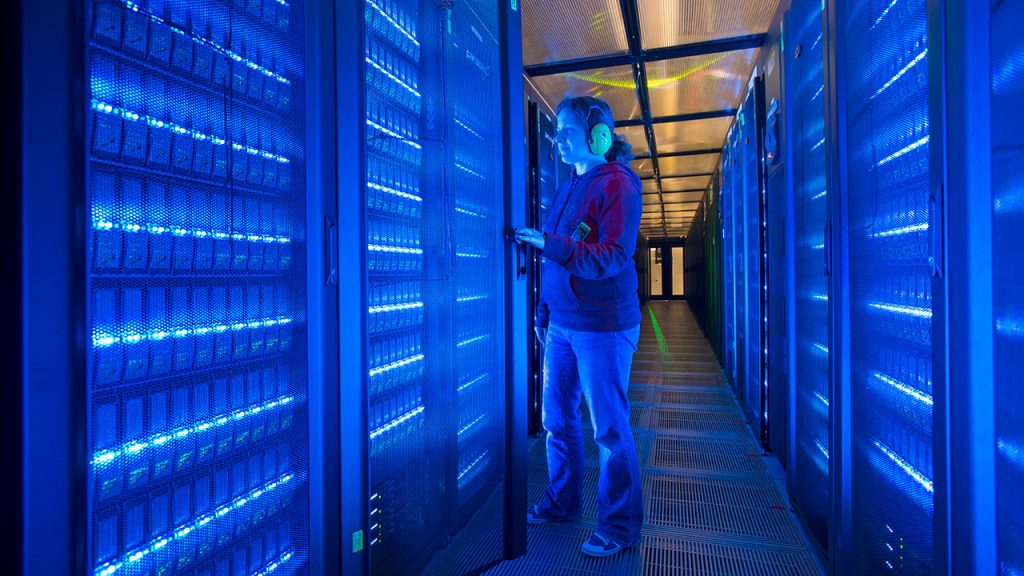
Often, the biggest problem that scientists face is finding enough computing power to run higher resolution models. Higher resolution models can require supercomputers the size of a tennis court, and take a long time to run.
January 24th, 2026
Hudson Valley, New York
This is one of the words/ phrases you can’t say in the new Trump Regime. See a comprehensive list at the Forbidden Words Project.
image: next year’s promise © Holly Troy 2025
A growing list of words and materials is being scrubbed from government websites and documents and flagged for review by federal agencies in an attempt by the Trump administration to remove all references not only to diversity, equity and inclusion, but also to climate change, vaccines, and a host of other topics.
from — Connelly, E. A. (2025e, December 22). Federal Government’s Growing Banned Words List Is Chilling Act of Censorship. PEN America.
Discover more from holly troy ~ sacred folly
Subscribe to get the latest posts sent to your email.
 holly troy ~ sacred folly
How will we correct / climate chang without any / climate modeling?
LikeLiked by 1 person