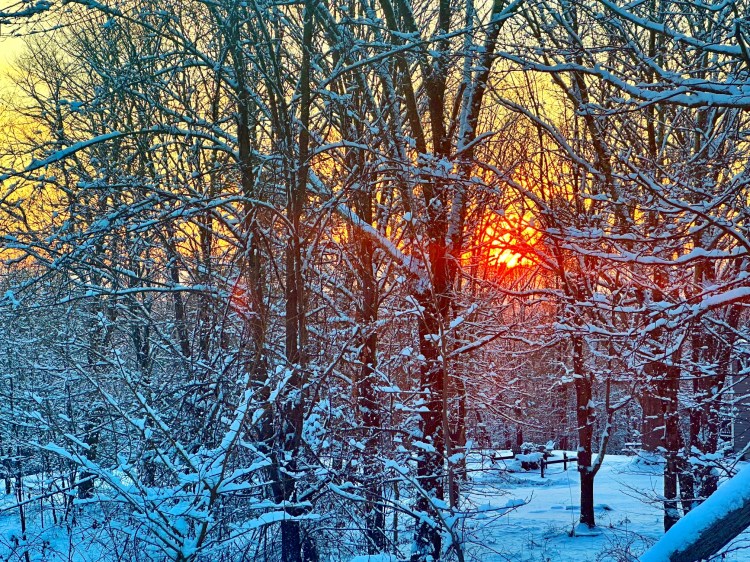
forbidden words: climate change
climate change
What is Climate Change? United Nations
Climate change refers to long-term shifts in temperatures and weather patterns. Such shifts can be natural, due to changes in the sun’s activity or large volcanic eruptions. But since the 1800s, human activities have been the main driver of climate change, primarily due to the burning of fossil fuels like coal, oil and gas.
Burning fossil fuels generates greenhouse gas emissions that act like a blanket wrapped around the Earth, trapping the sun’s heat and raising temperatures.
The main greenhouse gases that are causing climate change include carbon dioxide and methane. These come from using gasoline for driving a car or coal for heating a building, for example. Clearing land and cutting down forests can also release carbon dioxide. Agriculture, oil and gas operations are major sources of methane emissions. Energy, industry, transport, buildings, agriculture and land use are among the main sectors causing greenhouse gases.
Humans are responsible for global warming
Climate scientists have showed that humans are responsible for virtually all global heating over the last 200 years. Human activities like the ones mentioned above are causing greenhouse gases that are warming the world faster than at any time in at least the last two thousand years.
The average temperature of the Earth’s surface is now about 1.42°C warmer than it was in the late 1800s-prior to the industrial revolution-and warmer than at any time in the last 100,000 years. The last decade (2015-2024) was the warmest on record, and each of the last four decades has been warmer than any previous decade since 1850.
Many people think that climate change mainly means warmer temperatures. But temperature rise is only the beginning of the story. Because the Earth is a system where everything is connected, changes in one area can influence changes in all others.
The consequences of climate change include, among others, intense droughts, water scarcity, severe fires, rising sea levels, flooding, melting polar ice, catastrophic storms and declining biodiversity.
People are experiencing climate change in diverse ways
Climate change can affect our health, ability to grow food, housing, safety and work. Some of us are already more vulnerable to climate impacts, such as people living in small island nations and other developing countries. Conditions like sea-level rise and saltwater intrusion have advanced to the point where entire communities have had to relocate, while protracted droughts are putting people at risk of famine. In the future, the number of people displaced by weather-related events is expected to rise.
Every increase in global warming matters
In a series of UN reports, thousands of scientists and government reviewers agreed that limiting global temperature rise to no more than 1.5°C would help us avoid the worst climate impacts and maintain a liveable climate. Yet policies currently in place point to up to 2.8°C of warming by the end of the century.
The emissions that cause climate change come from every part of the world and affect everyone, but some countries produce much more than others. The six biggest emitters (China, the United States of America, India, the European Union, the Russian Federation, and Indonesia) together account for more than half of all global greenhouse gas emissions. By contrast, the 45 least developed countries contribute only 3 per cent of global greenhouse gas emissions.
Everyone must take climate action, but people and countries creating more of the problem have a greater responsibility to act first.
We face a huge challenge but already know many solutions
Many climate change solutions can deliver economic benefits while improving our lives and protecting the environment. We also have global frameworks and agreements to guide progress, such as the Sustainable Development Goals, the UN Framework Convention on Climate Change and the Paris Agreement. Three broad categories of action are: cutting emissions, adapting to climate impacts and financing required adjustments.
Switching energy systems from fossil fuels to renewables like solar or wind will reduce the emissions driving climate change. But we have to act now. While a growing number of countries is committing to net zero emissions by 2050, emissions must be cut in half by 2030 to keep warming below 1.5°C. Achieving this means huge declines in the use of coal, oil and gas: production and consumption of all fossil fuels need to be cut by at least 30 per cent by 2030 in order to prevent catastrophic levels of climate change.
Adapting to climate consequences protects people, homes, businesses, livelihoods, infrastructure and natural ecosystems. It covers current impacts and those likely in the future. Adaptation will be required everywhere but must be prioritized now for the most vulnerable people with the fewest resources to cope with climate hazards. The rate of return can be high. Early warning systems for disasters, for instance, save lives and property, and can deliver benefits up to 10 times the initial cost.
We can pay the bill now, or pay dearly in the future
Climate action requires significant financial investments by governments and businesses. But climate inaction is vastly more expensive. One critical step is for developed countries to support developing countries so they can adapt and move towards greener economies.
from — United Nations. (n.d.-b). What is climate change? | United Nations.
climate change
Present-day climate change includes both global warming—the ongoing increase in global average temperature—and its wider effects on Earth’s climate system. Climate change in a broader sense also includes previous long-term changes to Earth’s climate. The modern-day rise in global temperatures is driven by human activities, especially fossil fuel (coal, oil and natural gas) burning since the Industrial Revolution.[3][4] Fossil fuel use, deforestation, and some agricultural and industrial practices release greenhouse gases.[5] These gases absorb some of the heat that the Earth radiates after it warms from sunlight, warming the lower atmosphere. Earth’s atmosphere now has roughly 50% more carbon dioxide, the main gas driving global warming, than it did at the end of the pre-industrial era, reaching levels not seen for millions of years.[6]
Climate change has an increasingly large impact on the environment. Deserts are expanding, while heat waves and wildfires are becoming more common.[7] Amplified warming in the Arctic has contributed to thawing permafrost, retreat of glaciers and sea ice decline.[8] Higher temperatures are also causing more intense storms, droughts, and other weather extremes.[9] Rapid environmental change in mountains, coral reefs, and the Arctic is forcing many species to relocate or become extinct.[10] Even if efforts to minimize future warming are successful, some effects will continue for centuries. These include ocean heating, ocean acidification and sea level rise.[11]
Climate change threatens people with increased flooding, extreme heat, increased food and water scarcity, more disease, and economic loss.[12] Human migration and conflict can also be a result.[13] The World Health Organization calls climate change one of the biggest threats to global health in the 21st century.[14] Societies and ecosystems will experience more severe risks without action to limit warming.[15] Adapting to climate change through efforts like flood control measures or drought-resistant crops partially reduces climate change risks, although some limits to adaptation have already been reached.[16] Poorer communities are responsible for a small share of global emissions, yet have the least ability to adapt and are most vulnerable to climate change.[17][18]

Examples of some effects of climate change: Wildfire intensified by heat and drought, bleaching of corals occurring more often due to marine heatwaves, and worsening droughts compromising water supplies.
Many climate change impacts have been observed in the first decades of the 21st century, with 2024 the warmest on record at +1.60 °C (2.88 °F) since regular tracking began in 1850.[20][21] Additional warming will increase these impacts and can trigger tipping points, such as melting all of the Greenland ice sheet.[22] Under the 2015 Paris Agreement, nations collectively agreed to keep warming “well under 2 °C”. However, with pledges made under the Agreement, global warming would still reach about 2.8 °C (5.0 °F) by the end of the century.[23]
There is widespread support for climate action worldwide,[24][25] and most countries aim to stop emitting carbon dioxide.[26] Fossil fuels can be phased out by stopping subsidising them, conserving energy and switching to energy sources that do not produce significant carbon pollution. These energy sources include wind, solar, hydro, and nuclear power.[27] Cleanly generated electricity can replace fossil fuels for powering transportation, heating buildings, and running industrial processes.[28] Carbon can also be removed from the atmosphere, for instance by increasing forest cover and farming with methods that store carbon in soil.[29][30][31]
Terminology
Before the 1980s, it was unclear whether the warming effect of increased greenhouse gases was stronger than the cooling effect of airborne particulates in air pollution. Scientists used the term inadvertent climate modification to refer to human impacts on the climate at this time.[32] In the 1980s, the terms global warming and climate change became more common, often being used interchangeably.[33][34][35] Scientifically, global warming refers only to increased global average surface temperature, while climate change describes both global warming and its effects on Earth’s climate system, such as precipitation changes.[32]
Climate change can also be used more broadly to include changes to the climate that have happened throughout Earth’s history.[36] Global warming—used as early as 1975[37]—became the more popular term after NASA climate scientist James Hansen used it in his 1988 testimony in the U.S. Senate.[38] Since the 2000s, usage of climate change has increased.[39] Various scientists, politicians and media may use the terms climate crisis or climate emergency to talk about climate change, and may use the term global heating instead of global warming.[40][41]
see more at — Wikipedia contributors. (2026d, January 19). Climate change – Wikipedia.
~ ~ ~
climate
climate, noun
-
the composite or generally prevailing weather conditions of a region, as temperature, air pressure, humidity, precipitation, sunshine, cloudiness, and winds, throughout the year, averaged over a series of years.
-
a region or area characterized by a given climate.
to move to a warm climate.
-
the prevailing attitudes, standards, or environmental conditions of a group, period, or place.
a climate of political unrest.
- Synonyms:
- temper, tone, spirit, atmosphere, mood
climate, scientific
The general or average weather conditions of a certain region, including temperature, rainfall, and wind. On Earth, climate is most affected by latitude, the tilt of the Earth’s axis, the movements of the Earth’s wind belts, the difference in temperatures of land and sea, and topography. Human activity, especially relating to actions relating to the depletion of the ozone layer, is also an important factor.
climate, cultural
A region’s usual weather patterns. The climate at any point on Earth is determined by things such as the general movement of the atmosphere, the proximity of the oceans, and the altitude of the location.
Usage
Climatic is sometimes wrongly used where climactic is meant. Climatic is properly used to talk about things relating to climate; climactic is used to describe something which forms a climax
Discover More
The climate also is affected by the sun, by changes in the orbit of the Earth, by plate tectonics, and by human activities, particularly the burning of fossil fuels, which may lead to a greenhouse effect.
Other Word Forms
- climatic adjective
- climatically adverb
- subclimate noun
Etymology
Origin of climate
First recorded in 1350–1400, for an earlier sense; 1595–1605 climate for def. 2; Middle English climat, from Latin clīmat- (stem of clīma ), from Greek klīmat- , stem of klī́ma “slope,” from klī́(nein) “to bend, lean, slope” + -ma, noun suffix
from — Definition of climate. (n.d.).
~ ~ ~
climate
Climate is the long-term weather pattern in a region, typically averaged over 30 years.[1][2] More rigorously, it is the mean and variability of meteorological variables over a time spanning from months to millions of years. Some of the meteorological variables that are commonly measured are temperature, humidity, atmospheric pressure, wind, and precipitation. In a broader sense, climate is the state of the components of the climate system, including the atmosphere, hydrosphere, cryosphere, lithosphere and biosphere and the interactions between them.[1] The climate of a location is affected by its latitude, longitude, terrain, altitude, land use and nearby water bodies and their currents.[3]
Climates can be classified according to the average and typical variables, most commonly temperature and precipitation. The most widely used classification scheme is the Köppen climate classification. The Thornthwaite system,[4] in use since 1948, incorporates evapotranspiration along with temperature and precipitation information and is used in studying biological diversity and how climate change affects it. The major classifications in Thornthwaite’s climate classification are microthermal, mesothermal, and megathermal.[5] Finally, the Bergeron and Spatial Synoptic Classification systems focus on the origin of air masses that define the climate of a region.
Paleoclimatology is the study of ancient climates. Paleoclimatologists seek to explain climate variations for all parts of the Earth during any given geologic period, beginning with the time of the Earth’s formation.[6] Since very few direct observations of climate were available before the 19th century, paleoclimates are inferred from proxy variables. They include non-biotic evidence—such as sediments found in lake beds and ice cores—and biotic evidence—such as tree rings and coral. Climate models are mathematical models of past, present, and future climates. Climate change may occur over long and short timescales due to various factors. Recent warming is discussed in terms of global warming, which results in redistributions of biota. For example, as climate scientist Lesley Ann Hughes has written: “a 3 °C [5 °F] change in mean annual temperature corresponds to a shift in isotherms of approximately 300–400 km [190–250 mi] in latitude (in the temperate zone) or 500 m [1,600 ft] in elevation. Therefore, species are expected to move upwards in elevation or towards the poles in latitude in response to shifting climate zones.”[7][8]
Definition
Climate (from Ancient Greek κλίμα ‘inclination‘) is commonly defined as the weather averaged over a long period.[9] The standard averaging period is 30 years,[10] but other periods may be used depending on the purpose. Climate also includes statistics other than the average, such as the magnitudes of day-to-day or year-to-year variations. The Intergovernmental Panel on Climate Change (IPCC) 2001 glossary definition is as follows:
“Climate in a narrow sense is usually defined as the “average weather”, or more rigorously, as the statistical description in terms of the mean and variability of relevant quantities over a period ranging from months to thousands or millions of years. The classical period is 30 years, as defined by the World Meteorological Organization (WMO). These quantities are most often surface variables such as temperature, precipitation, and wind. Climate in a wider sense is the state, including a statistical description, of the climate system.”[11]
The World Meteorological Organization (WMO) describes “climate normals” as “reference points used by climatologists to compare current climatological trends to that of the past or what is considered typical. A climate normal is defined as the arithmetic average of a climate element (e.g. temperature) over a 30-year period. A 30-year period is used as it is long enough to filter out any interannual variation or anomalies such as El Niño–Southern Oscillation, but also short enough to be able to show longer climatic trends.”[12]
The WMO originated from the International Meteorological Organization which set up a technical commission for climatology in 1929. At its 1934 Wiesbaden meeting, the technical commission designated the thirty-year period from 1901 to 1930 as the reference time frame for climatological standard normals. In 1982, the WMO agreed to update climate normals, and these were subsequently completed on the basis of climate data from 1 January 1961 to 31 December 1990.[13] The 1961–1990 climate normals serve as the baseline reference period. The next set of climate normals to be published by WMO is from 1991 to 2020.[14] Aside from collecting from the most common atmospheric variables (air temperature, pressure, precipitation and wind), other variables such as humidity, visibility, cloud amount, solar radiation, soil temperature, pan evaporation rate, days with thunder and days with hail are also collected to measure change in climate conditions.[15]
The difference between climate and weather is usefully summarized by the popular phrase “Climate is what you expect, weather is what you get.”[16] Over historical time spans, there are a number of nearly constant variables that determine climate, including latitude, altitude, proportion of land to water, and proximity to oceans and mountains. All of these variables change only over periods of millions of years due to processes such as plate tectonics. Other climate determinants are more dynamic: the thermohaline circulation of the ocean leads to a 5 °C (9 °F) warming of the northern Atlantic Ocean compared to other ocean basins.[17] Other ocean currents redistribute heat between land and water on a more regional scale. The density and type of vegetation coverage affects solar heat absorption,[18] water retention, and rainfall on a regional level. Alterations in the quantity of atmospheric greenhouse gases (particularly carbon dioxide and methane) determines the amount of solar energy retained by the planet, leading to global warming or global cooling. The variables which determine climate are numerous and the interactions complex, but there is general agreement that the broad outlines are understood, at least insofar as the determinants of historical climate change are concerned.[19][20]
Climate classification
.png)
Climate classifications are systems that categorize the world’s climates. A climate classification may correlate closely with a biome classification, as climate is a major influence on life in a region. One of the most used is the Köppen climate classification scheme first developed in 1899.[21]
There are several ways to classify climates into similar regimes. Originally, climes were defined in Ancient Greece to describe the weather depending upon a location’s latitude. Modern climate classification methods can be broadly divided into genetic methods, which focus on the causes of climate, and empiric methods, which focus on the effects of climate. Examples of genetic classification include methods based on the relative frequency of different air mass types or locations within synoptic weather disturbances. Examples of empiric classifications include climate zones defined by plant hardiness,[22] evapotranspiration,[23] or more generally the Köppen climate classification which was originally designed to identify the climates associated with certain biomes. A common shortcoming of these classification schemes is that they produce distinct boundaries between the zones they define, rather than the gradual transition of climate properties more common in nature.
Record
Paleoclimatology
Paleoclimatology is the study of past climate over a great period of the Earth‘s history. It uses evidence with different time scales (from decades to millennia) from ice sheets, tree rings, sediments, pollen, coral, and rocks to determine the past state of the climate. It demonstrates periods of stability and periods of change and can indicate whether changes follow patterns such as regular cycles.[24]
Modern
Details of the modern climate record are known through the taking of measurements from such weather instruments as thermometers, barometers, and anemometers during the past few centuries. The instruments used to study weather over the modern time scale, their observation frequency, their known error, their immediate environment, and their exposure have changed over the years, which must be considered when studying the climate of centuries past.[25] Long-term modern climate records skew towards population centres and affluent countries.[26] Since the 1960s, the launch of satellites allow records to be gathered on a global scale, including areas with little to no human presence, such as the Arctic region and oceans.
Climate variability
Climate variability is the term to describe variations in the mean state and other characteristics of climate (such as chances or possibility of extreme weather, etc.) “on all spatial and temporal scales beyond that of individual weather events.”[27] Some of the variability does not appear to be caused systematically and occurs at random times. Such variability is called random variability or noise. On the other hand, periodic variability occurs relatively regularly and in distinct modes of variability or climate patterns.[28]
There are close correlations between Earth’s climate oscillations and astronomical factors (barycenter changes, solar variation, cosmic ray flux, cloud albedo feedback, Milankovic cycles), and modes of heat distribution between the ocean-atmosphere climate system. In some cases, current, historical and paleoclimatological natural oscillations may be masked by significant volcanic eruptions, impact events, irregularities in climate proxy data, positive feedback processes or anthropogenic emissions of substances such as greenhouse gases.[29]
Over the years, the definitions of climate variability and the related term climate change have shifted. While the term climate change now implies change that is both long-term and of human causation, in the 1960s the word climate change was used for what we now describe as climate variability, that is, climatic inconsistencies and anomalies.[28]
Climate change


Climate change is the variation in global or regional climates over time.[34] It reflects changes in the variability or average state of the atmosphere over time scales ranging from decades to millions of years. These changes can be caused by processes internal to the Earth, external forces (e.g. variations in sunlight intensity) or human activities, as found recently.[35][36] Scientists have identified Earth’s Energy Imbalance (EEI) to be a fundamental metric of the status of global change.[37]
In recent usage, especially in the context of environmental policy, the term “climate change” often refers only to changes in modern climate, including the rise in average surface temperature known as global warming. In some cases, the term is also used with a presumption of human causation, as in the United Nations Framework Convention on Climate Change (UNFCCC). The UNFCCC uses “climate variability” for non-human caused variations.[38]
Earth has undergone periodic climate shifts in the past, including four major ice ages. These consist of glacial periods where conditions are colder than normal, separated by interglacial periods. The accumulation of snow and ice during a glacial period increases the surface albedo, reflecting more of the Sun’s energy into space and maintaining a lower atmospheric temperature. Increases in greenhouse gases, such as by volcanic activity, can increase the global temperature and produce an interglacial period. Suggested causes of ice age periods include the positions of the continents, variations in the Earth’s orbit, changes in the solar output, and volcanism.[39] However, these naturally caused changes in climate occur on a much slower time scale than the present rate of change which is caused by the emission of greenhouse gases by human activities.[40]
According to the EU’s Copernicus Climate Change Service, average global air temperature has passed 1.5C of warming the period from February 2023 to January 2024.[41]
Climate models
Climate models use quantitative methods to simulate the interactions and transfer of radiative energy between the atmosphere,[42] oceans, land surface and ice through a series of physics equations. They are used for a variety of purposes, from the study of the dynamics of the weather and climate system to projections of future climate. All climate models balance, or very nearly balance, incoming energy as short wave (including visible) electromagnetic radiation to the Earth with outgoing energy as long wave (infrared) electromagnetic radiation from the Earth. Any imbalance results in a change in the average temperature of the Earth.
Climate models are available on different resolutions ranging from >100 km to 1 km. High resolutions in global climate models require significant computational resources, and so only a few global datasets exist. Global climate models can be dynamically or statistically downscaled to regional climate models to analyze impacts of climate change on a local scale. Examples are ICON[43] or mechanistically downscaled data such as CHELSA (Climatologies at high resolution for the earth’s land surface areas).[44][45]
The most talked-about applications of these models in recent years have been their use to infer the consequences of increasing greenhouse gases in the atmosphere, primarily carbon dioxide (see greenhouse gas). These models predict an upward trend in the global mean surface temperature, with the most rapid increase in temperature being projected for the higher latitudes of the Northern Hemisphere.
Models can range from relatively simple to quite complex. Simple radiant heat transfer models treat the Earth as a single point and average outgoing energy. This can be expanded vertically (as in radiative-convective models), or horizontally. Finally, more complex (coupled) atmosphere–ocean–sea ice global climate models discretise and solve the full equations for mass and energy transfer and radiant exchange.[46]
See also
from — Wikipedia contributors. (2001, August 1). Climate – Wikipedia.
~ ~ ~
change
changed, changing, verb (used with object)
-
to make the form, nature, content, future course, etc., of (something) different from what it is or from what it would be if left alone.
to change one’s name;
to change one’s opinion;
to change the course of history.
-
to transform or convert (usually followed byinto ).
The witch changed the prince into a toad.
-
to substitute another or others for; exchange for something else, usually of the same kind.
She changed her shoes when she got home from the office.
-
to give and take reciprocally; interchange.
to change places with someone.
- Synonyms:
- trade
-
to transfer from one (conveyance) to another.
You’ll have to change planes in Chicago.
-
to give or get an equivalent amount of money in lower denominations in exchange for.
to change a five-dollar bill.
-
to give or get foreign money in exchange for.
to change dollars into euros.
- Synonyms:
- convert
-
to remove and replace the covering or coverings of.
to change a bed.
-
to remove a dirty diaper from (a baby) and replace it with a clean one.
new parents, learning to change a baby.
changed, changing, used without object
-
to become different.
Overnight the nation’s mood changed.
-
to become altered or modified.
Colors change if they are exposed to the sun.
- Antonyms:
- remain
-
to become transformed or converted (usually followed byinto ).
The toad changed back into a prince.
-
to pass gradually into (usually followed by to orinto ).
Summer changed to autumn.
-
to switch or to make an exchange.
If you want to sit next to the window, I’ll change with you.
-
to transfer between trains or other conveyances.
We can take the local and change to an express at the next stop.
-
to remove one’s clothes and put on different clothes.
She changed into jeans.
-
(of the moon) to pass from one phase to another.
-
(of the voice) to become deeper in tone; come to have a lower register.
The boy’s voice began to change when he was thirteen.
change, noun
-
the act or fact of changing; fact of being changed.
They are pleased by the change in their son’s behavior.
- Synonyms:
- vicissitude, conversion, mutation, transmutation, transmutation
- Antonyms:
- permanence
-
a transformation or modification; alteration.
They noticed the change in his facial expression.
-
a variation or deviation.
a change in the daily routine.
-
the substitution of one thing for another.
We finally made the change to an oil-burning furnace.
- Synonyms:
- exchange
-
variety or novelty.
Let’s try a new restaurant for a change.
-
the passing from one place, state, form, or phase to another.
a change of seasons;
social change.
-
Jazz. harmonic progression from one tonality to another; modulation.
-
the supplanting of one thing by another.
We need a total change of leadership.
- Synonyms:
- replacement, replacement
-
anything that is or may be substituted for another.
- Synonyms:
- replacement, replacement
-
a fresh set of clothing.
-
money given in exchange for an equivalent of higher denomination.
-
a balance of money that is returned when the sum tendered in payment is larger than the sum due.
-
coins of low denomination.
-
any of the various sequences in which a peal of bells may be rung.
-
British. Also ‘change exchange.
-
Obsolete. changefulness; caprice.
change, verb phrase
idioms
-
change one’s mind, to change one’s opinions or intentions.
-
change hands. hand.
-
ring the changes,
-
to perform all permutations possible in ringing a set of tuned bells, as in a bell tower of a church.
-
to vary the manner of performing an action or of discussing a subject; repeat with variations.
-
-
change front, to shift a military force in another direction.
Usage
What is another way to say change? To change something is to make its form, nature, or content different from what it is currently or from what it would be if left alone. How is change different from alter? Find out on Thesaurus.com.
Other Word Forms
- changedness noun
- changeless adjective
- changelessly adverb
- changelessness noun
- changer noun
- unchanged adjective
- unchanging adjective
- unchangingly adverb
- unchangingness noun
Etymology
Origin of change
First recorded in 1175–1225; Middle English verb cha(u)ngen, from Anglo-French, Old French changer, from Late Latin cambiāre, Latin cambīre “to exchange, barter”; Middle English noun cha(u)nge, from Anglo-French, Old French, noun derivative of the verb; of Celtic origin
January 18th, 2026
Hudson Valley, New York
This is one of the words/ phrases you can’t say in the new Trump Regime. See a comprehensive list at the Forbidden Words Project.
image: snowy sunset © Holly Troy 2026
That’s exactly the sort of response the administration is hoping for, and it will immeasurably limit the research and other work supported by the federal government, universities and more, on the public’s behalf.
from — Connelly, E. A. (2025, December 22). Federal Government’s Growing Banned Words List Is Chilling Act of Censorship. PEN America.
Discover more from holly troy ~ sacred folly
Subscribe to get the latest posts sent to your email.
 holly troy ~ sacred folly
We must change before / climate change becomes something / irreversible
LikeLiked by 1 person